
A recipe for every need
Multiple polishing recipes can be set up for different phone models, scratch conditions and the grade you are aiming for. Light marks and heavier scratches each get the treatment that fits.
Scratch removal & cosmetic grading for pre-owned phones
XTR makes used smartphones worth more. Our polishing system removes display scratches and puts the factory coating back. Our vision system grades every device automatically. Use either one on its own, or run both as a single line.
Remove display scratches and restore the coating on fully assembled phones.
Display scratch removal → Solution 02 · stands aloneGrade every device automatically, to grading rules you define.
Automated cosmetic grading → Solution 03 · both togetherVision, polishing and shop-floor software working as one grade-upgrade line.
Grade, upgrade, track →Polishing Solution · Display scratch removal & grade upgrade
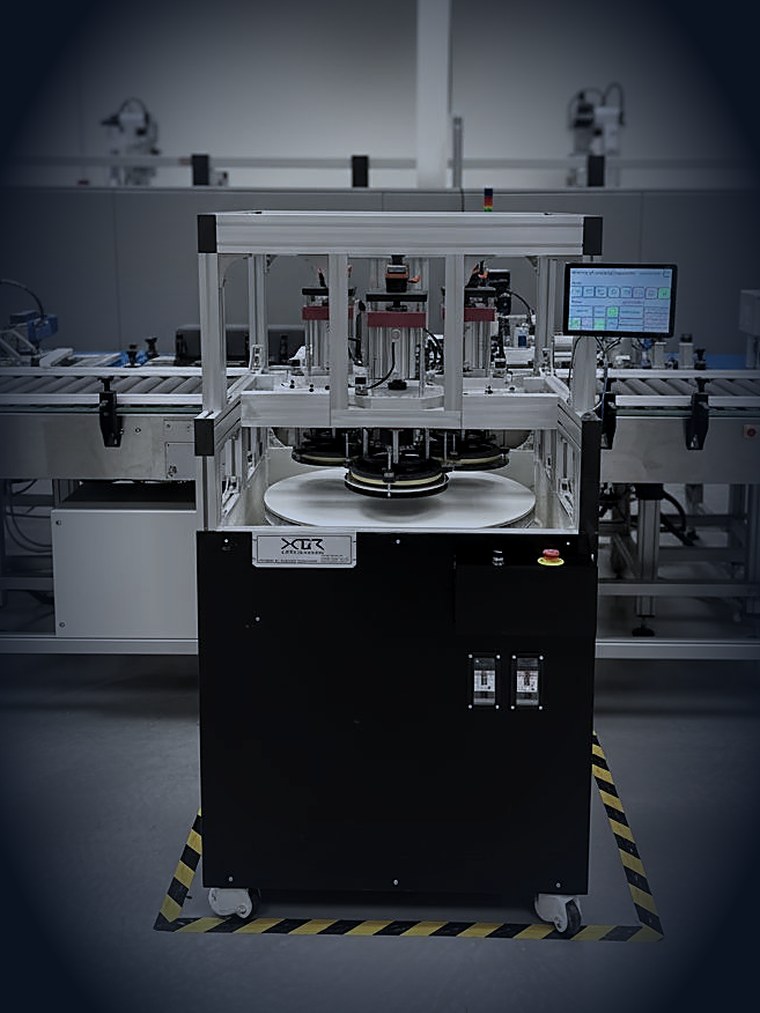
A two-part system for fully assembled phones. First it polishes the scratches out of the display glass. Then it puts back the anti-fingerprint coating that polishing removes, so the screen looks and feels like new. No disassembly.
Multiple polishing recipes can be set up for different phone models, scratch conditions and the grade you are aiming for. Light marks and heavier scratches each get the treatment that fits.
Our patented technology (US and Korea) applies the right pressure for the right amount of time. Scratches come out without harming the assembled smartphone.
Plasma preparation, coating and baking restore the anti-fingerprint finish to the standard that certified pre-owned programs expect.
The process uses very little water, so phones do not need to be sealed, taped or fixed in protective jigs before polishing.
Drag the handle to compare the display before and after polishing.
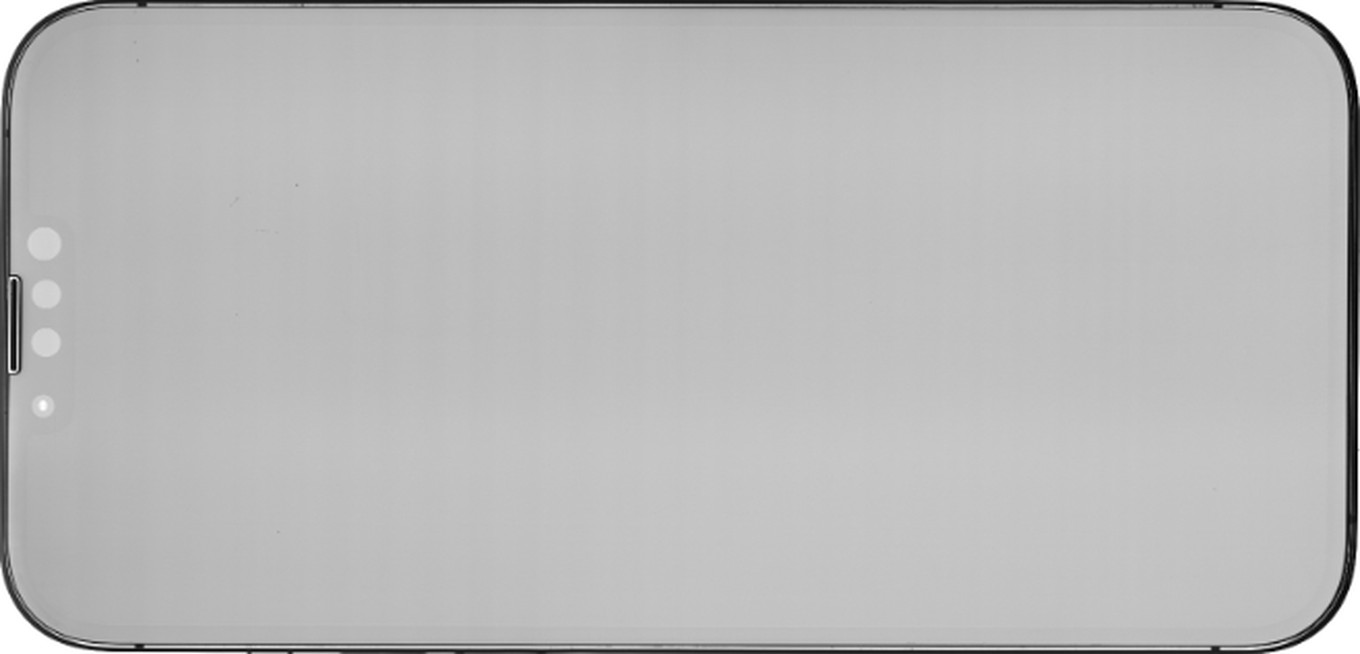
 Before · C
After · A
Before · C
After · A
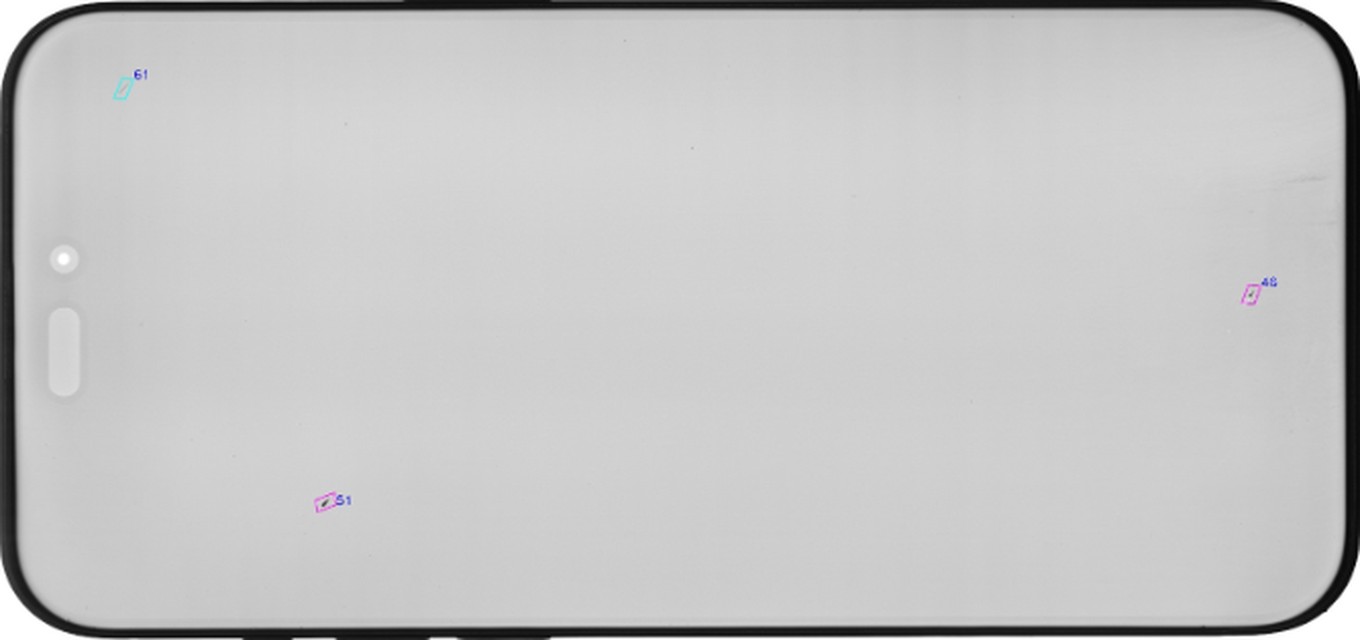
 Before · C
After · B
Before · C
After · B
Real captures from an XTR vision station. Results depend on the depth of the scratches and the condition of the device.
Designed and built by XTR.
 Patented
Polish
Removes scratches from several phones at once, each with its own recipe.
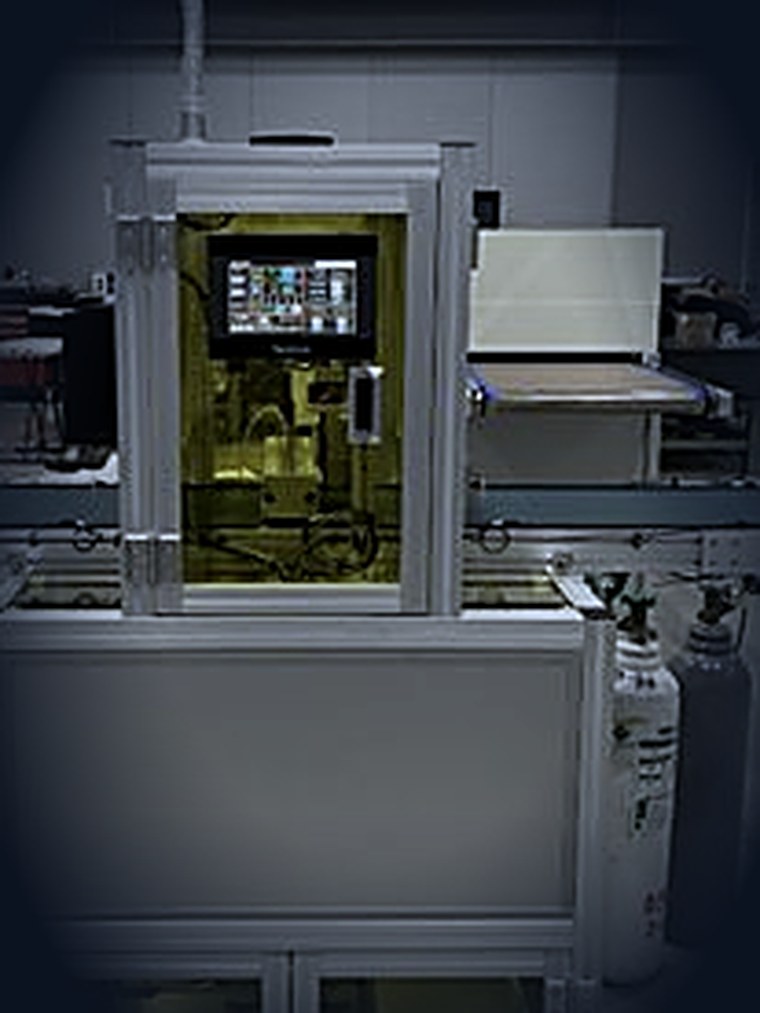
Plasma clean
Cleans and prepares the glass so the coating bonds.
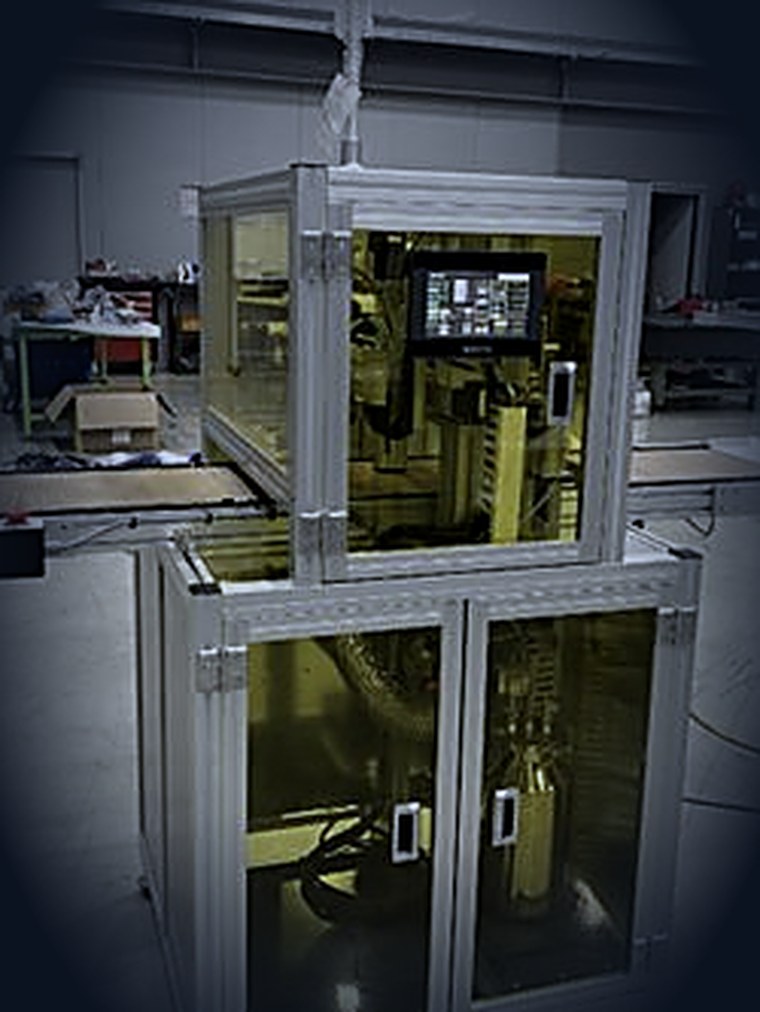
Coat
Applies the anti-fingerprint coating to the assembled phone.
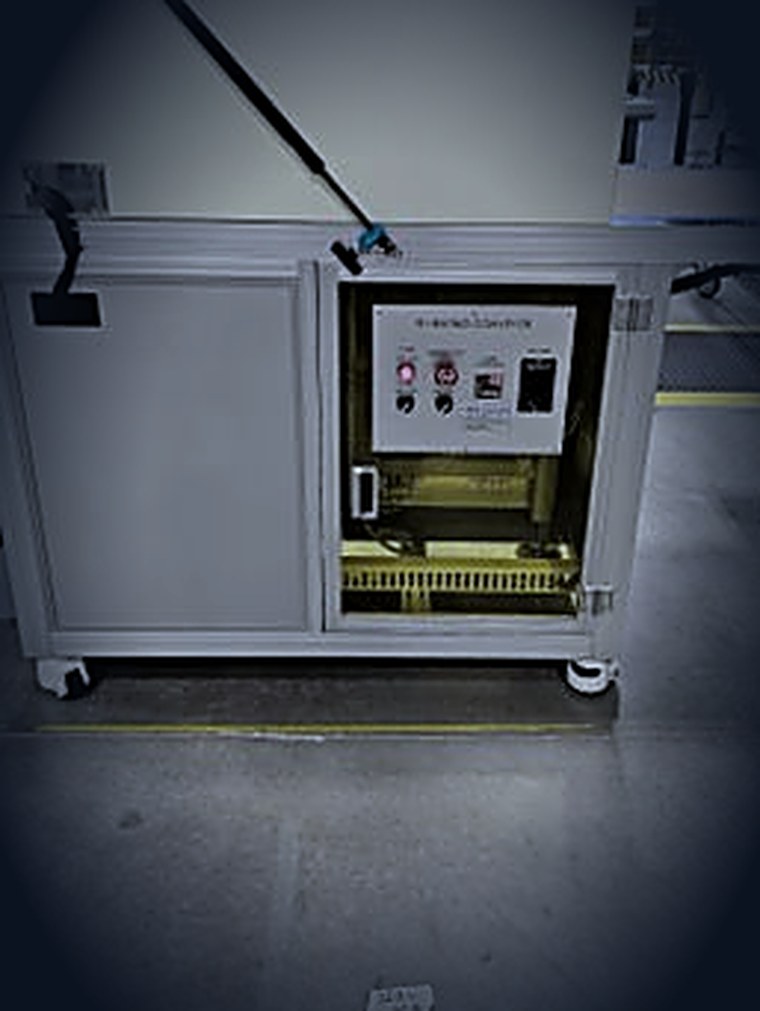
Bake
Cures the coating into a durable finish.
Vision Solution · Automated cosmetic grading
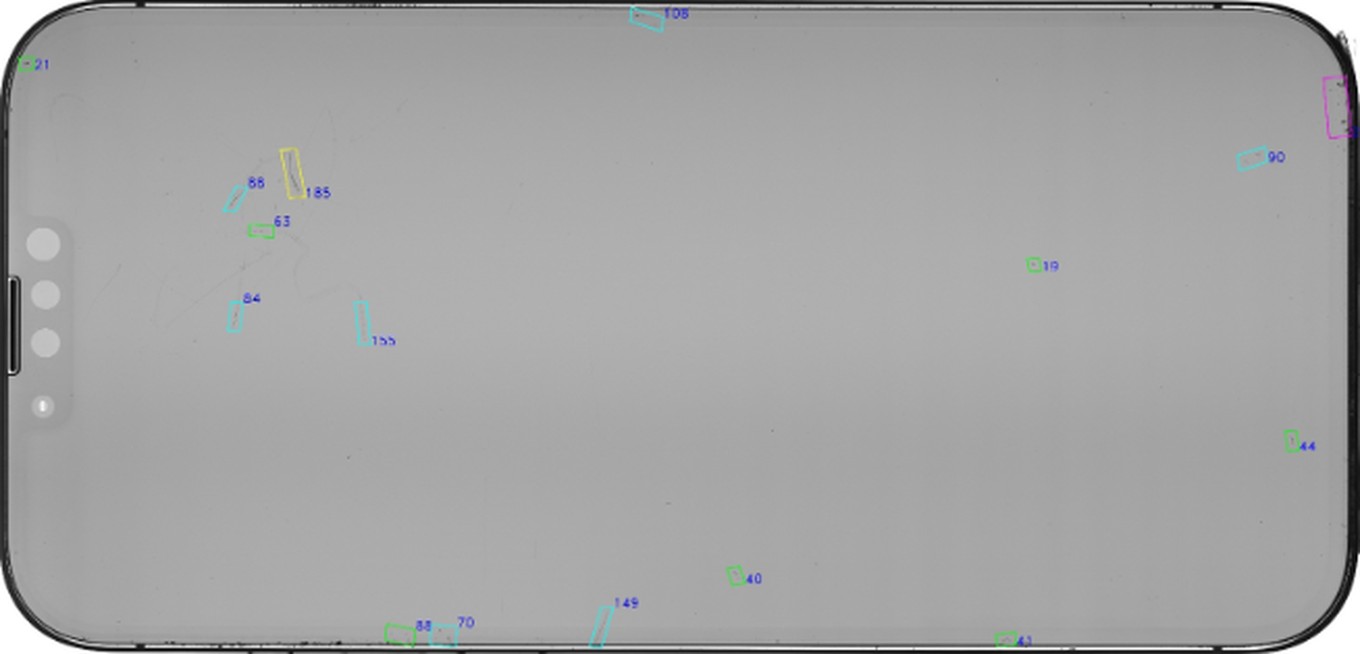
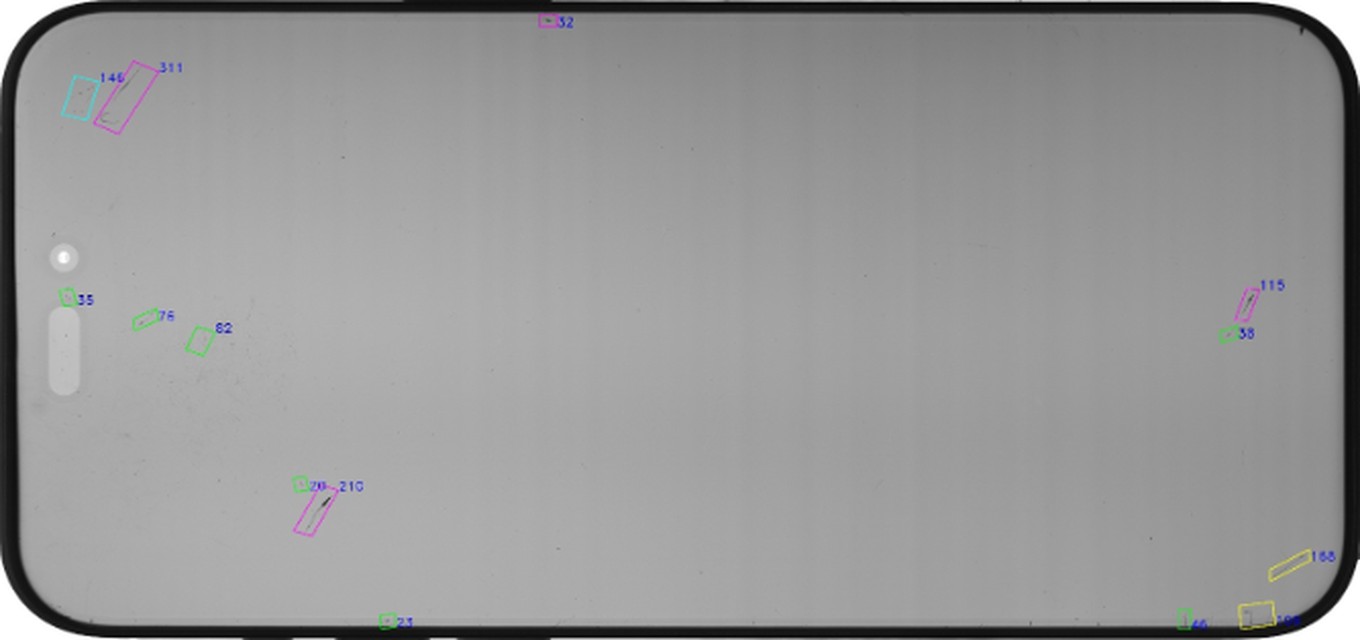
Cameras photograph every side of the phone. Software finds and measures each scratch. The grade is then assigned by rules you define, so it no longer depends on who is doing the grading or how long their shift has been.
The station photographs the front, back and all four sides automatically.
Image processing finds each scratch and measures it.
Your grading policy turns the measurements into a grade, in under 30 seconds per device.
Machine learning predicts what polishing would do for this phone, before anyone polishes it.
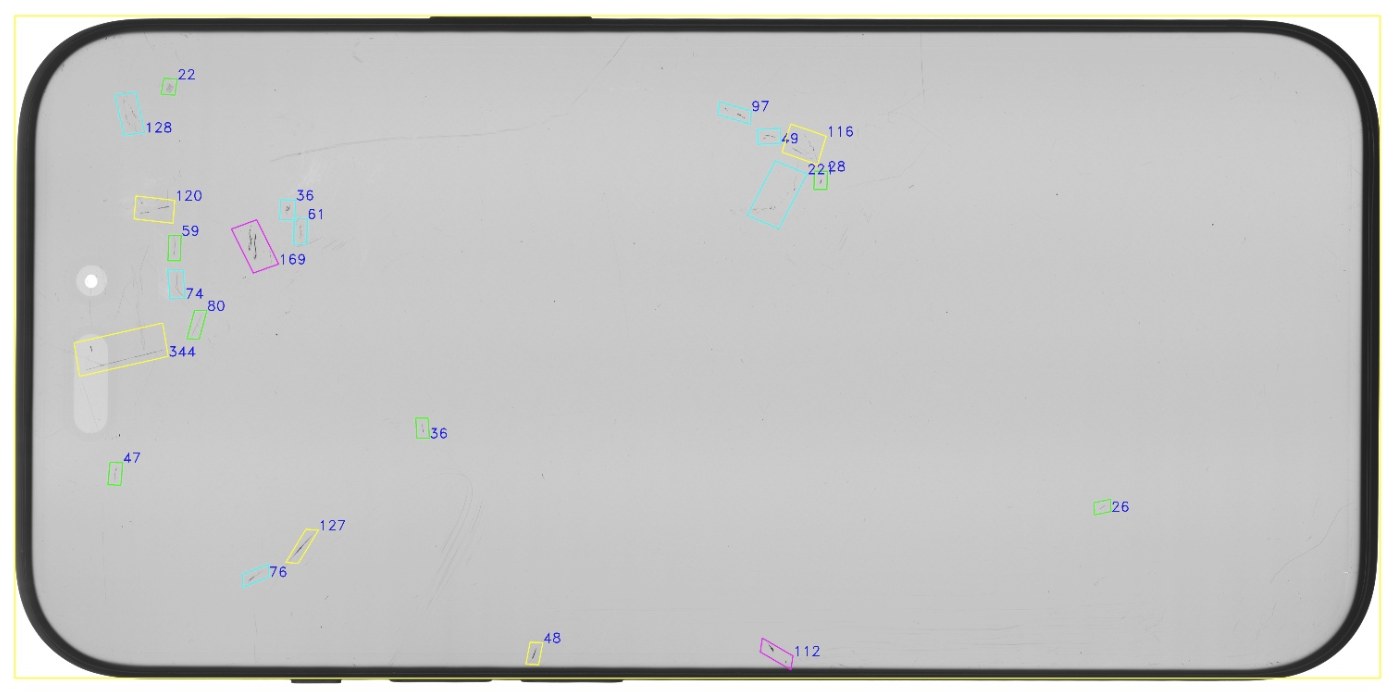
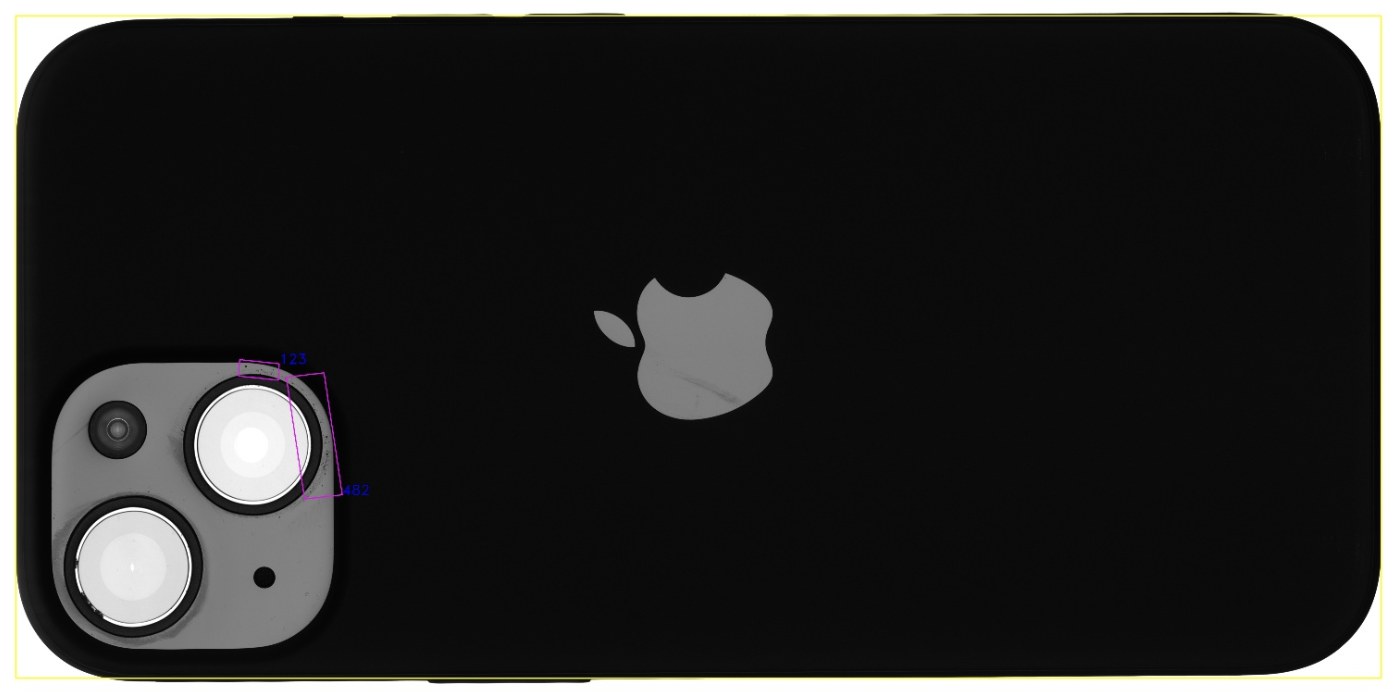




Real captures from an XTR vision station. Every scratch is outlined, numbered and measured.
Different customers and markets grade differently. Set up as many grading policies as you need, and grade the same device against any of them without scanning it again.
Example for illustration, using the device shown here. Policy names and rules are yours to define.
Know the result before you polish.
Not every scratch can be polished out, and polishing a phone that will not improve wastes machine time. XTR's machine-learning model looks at every scratch the vision system measured and predicts how likely it is to clear. From that it predicts the grade the phone would reach after polishing.
Place it at receiving, trade-in or quality control. Every device gets a consistent, documented grade with the images to back it up.
The same measurements predict which phones will improve with polishing, and by how much. Operators get a clear recommendation before any machine time is spent, and a second scan afterwards confirms the result.
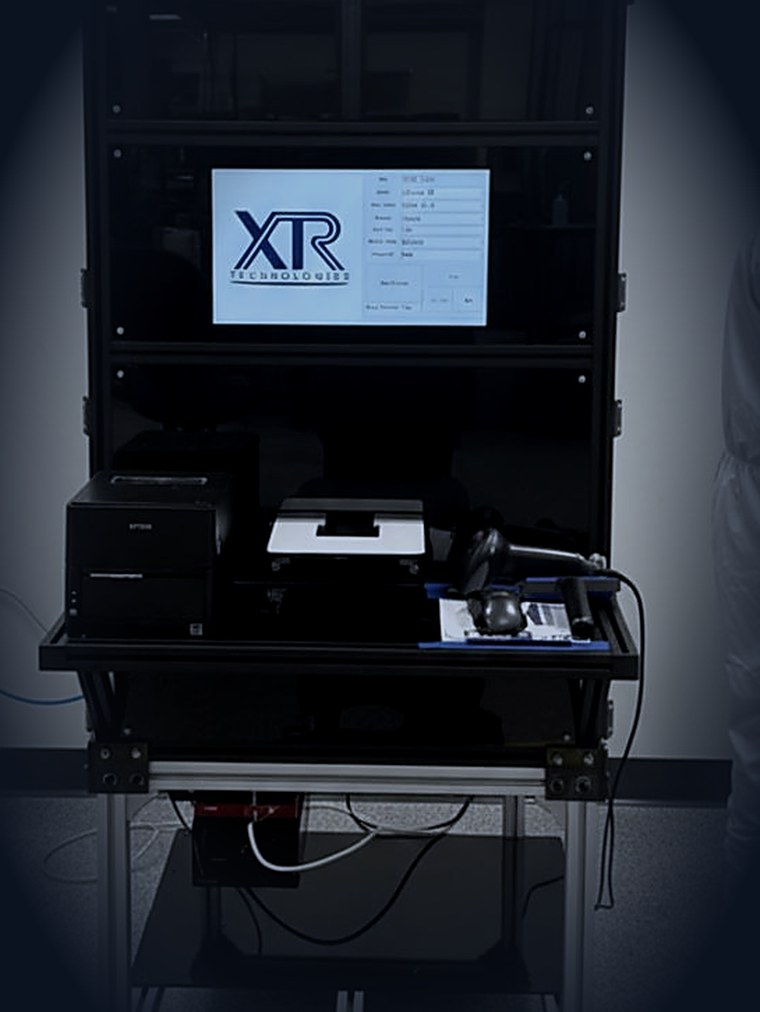
Complete Line · Vision + Polishing + Shop-floor software
Put the two solutions together and add XTR Shopfloor software, and you have one connected line. Each phone is graded, polished only if it will pay off, re-coated, checked again and tracked the whole way through.
Scan and grade the device
Will polishing raise the grade?
Remove the scratches
Plasma, coating, baking
Scan again, confirm the new grade
Know where every phone is, and what happened to it.
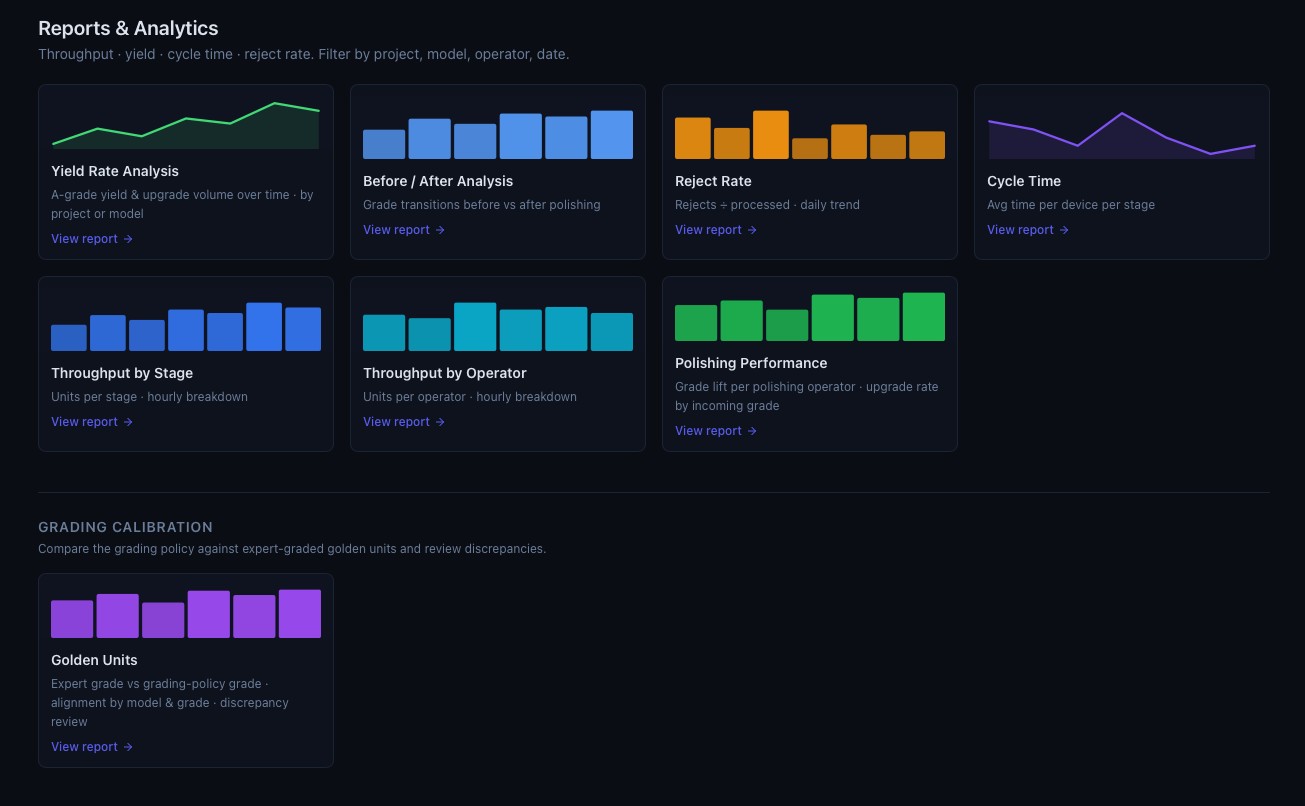
XTR Shopfloor is the software the whole line reports into. Every phone is tracked from receiving to shipping, every machine posts its own results, and every report comes from that one record. Choose a screen to see what it does.
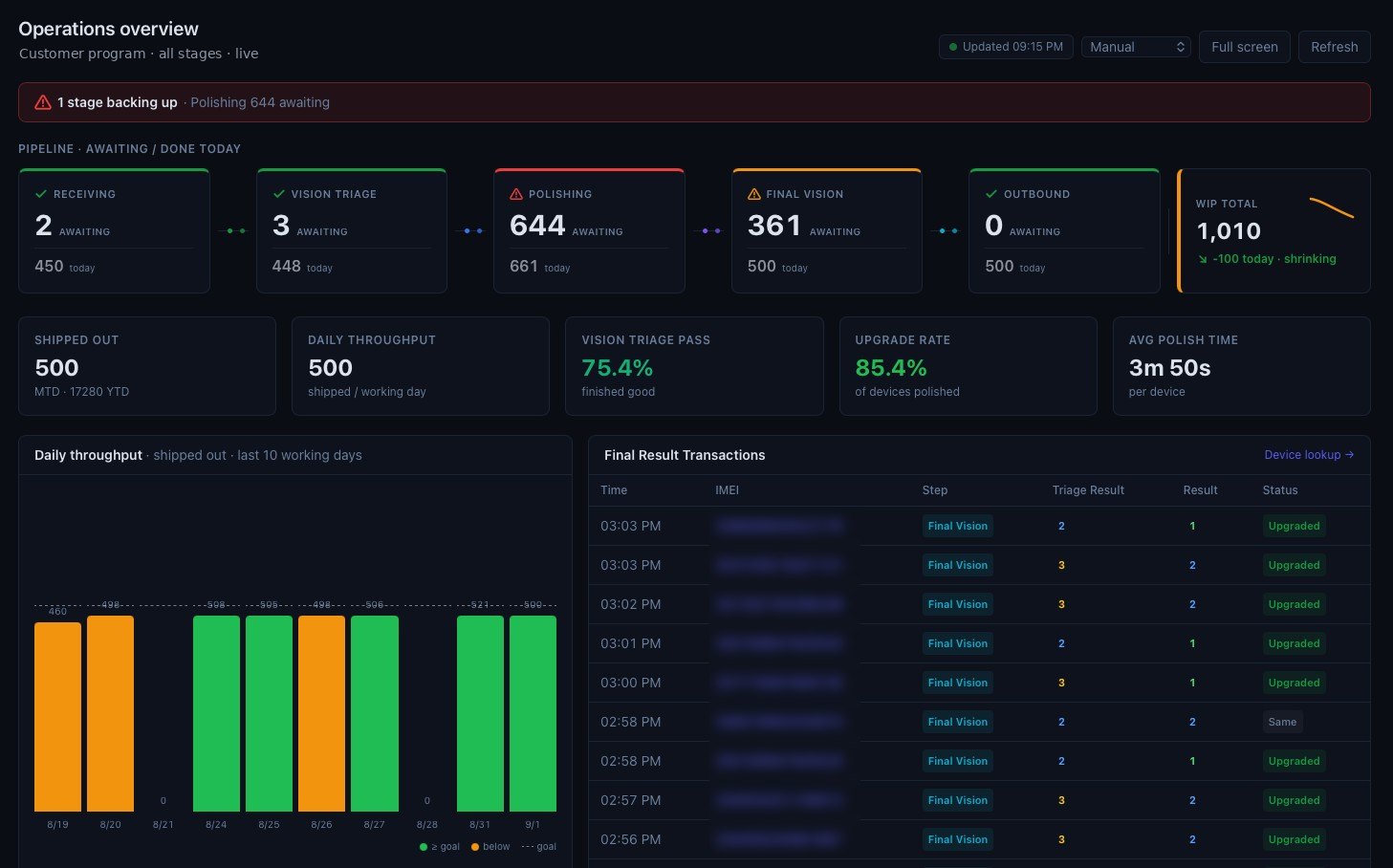
Customer name and device IMEIs masked.
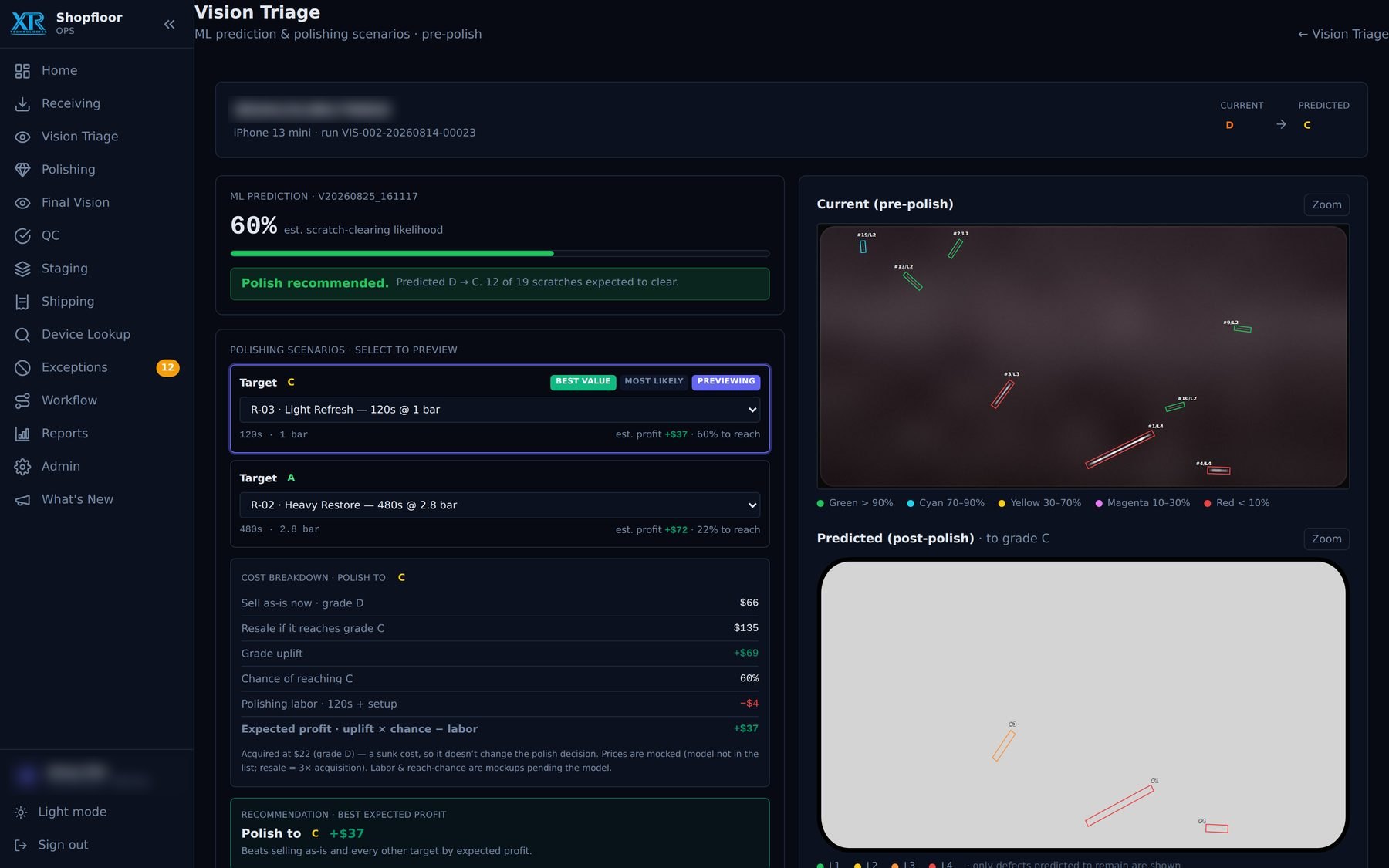
Device IMEI and operator name masked. Prices on this screen are sample values.
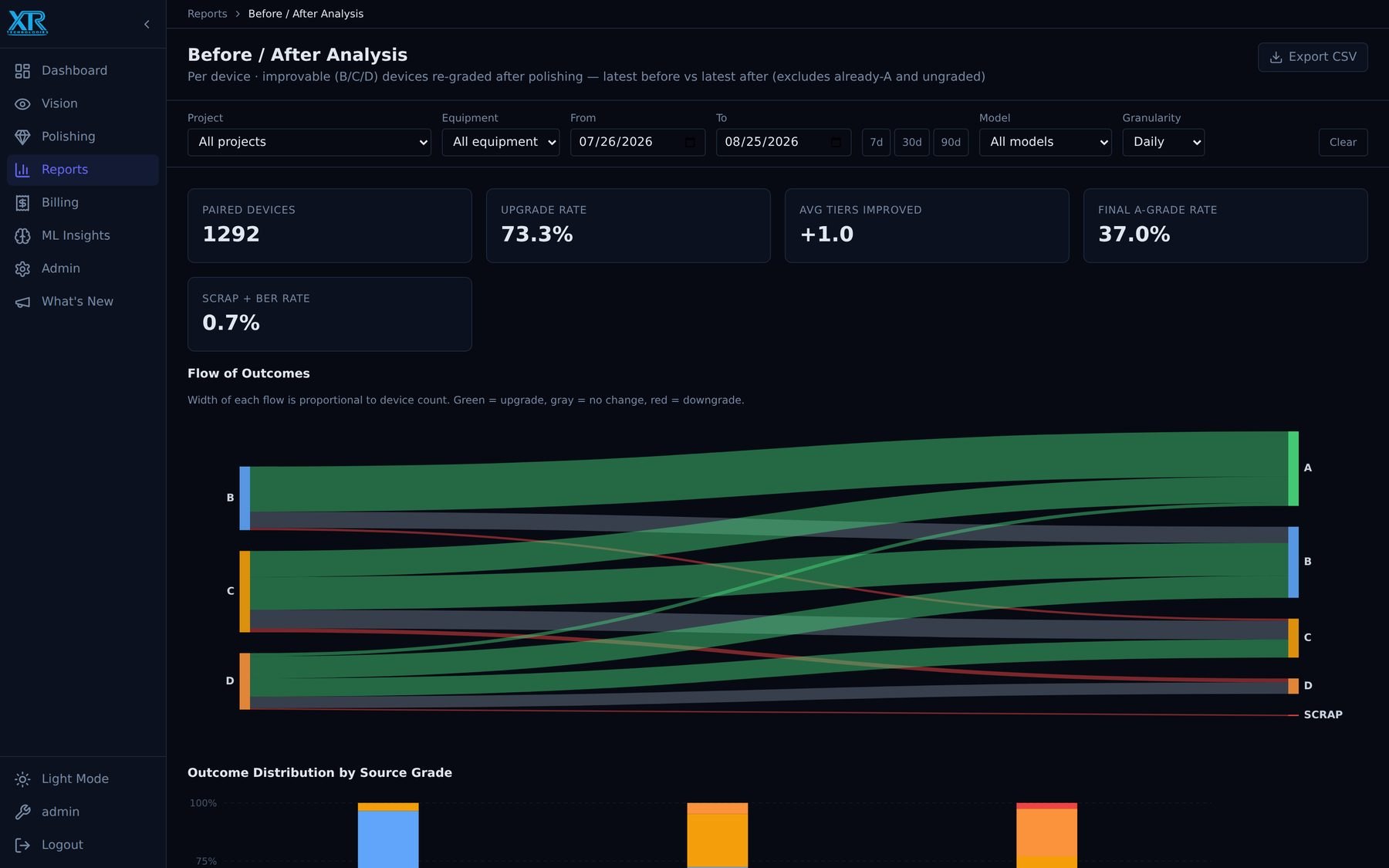
Report shown across all projects for one 30-day window.
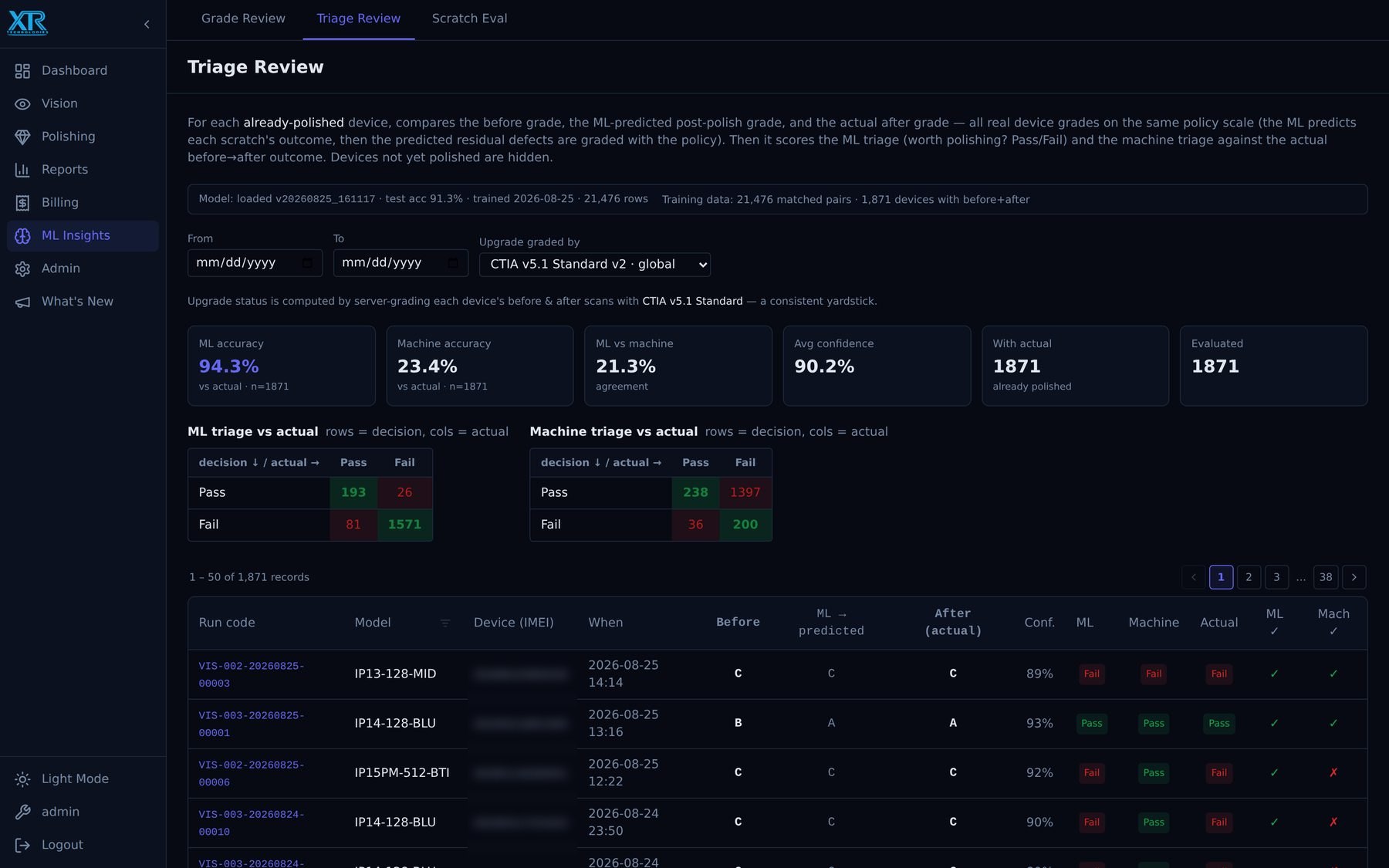
Device IMEIs masked.
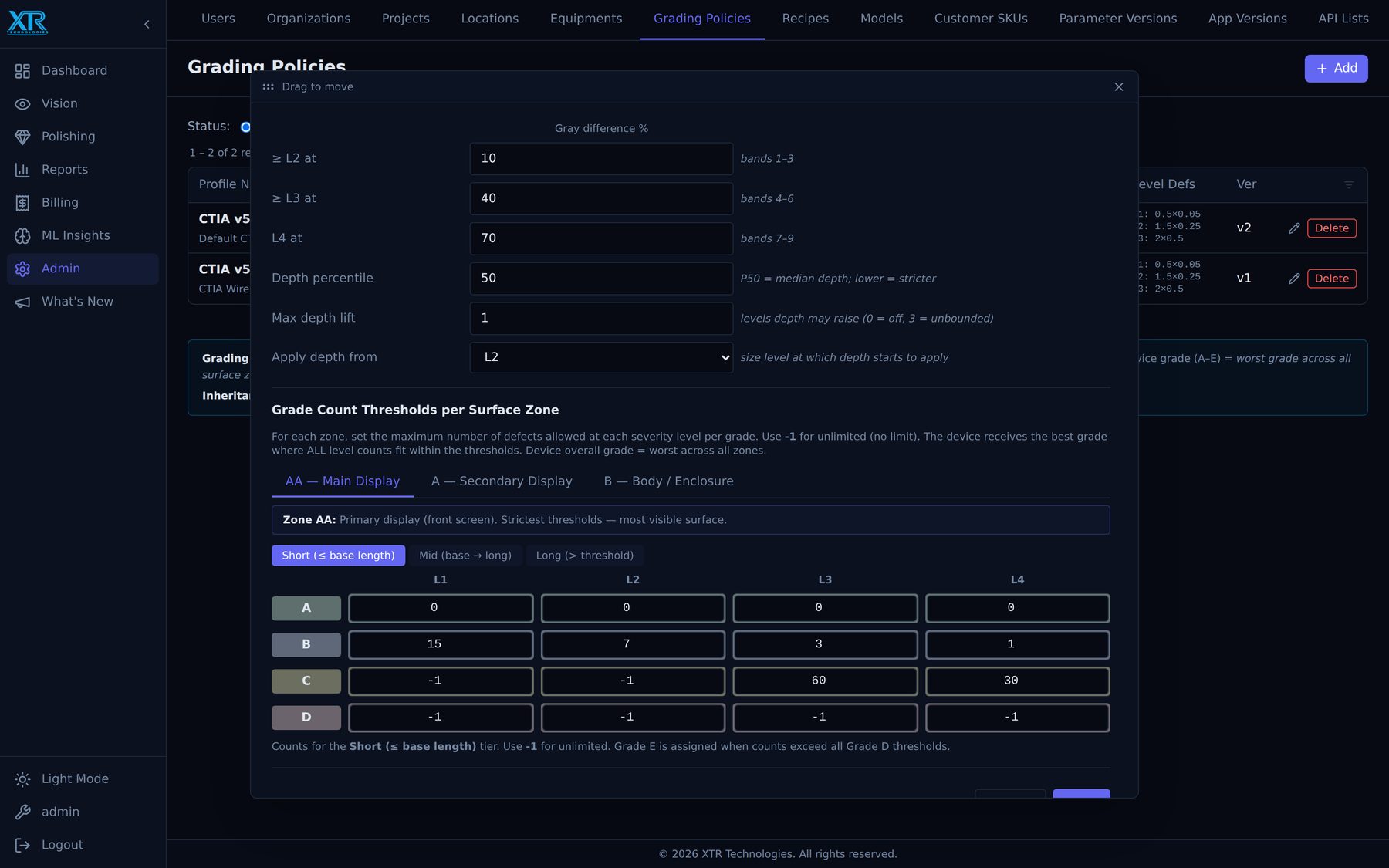
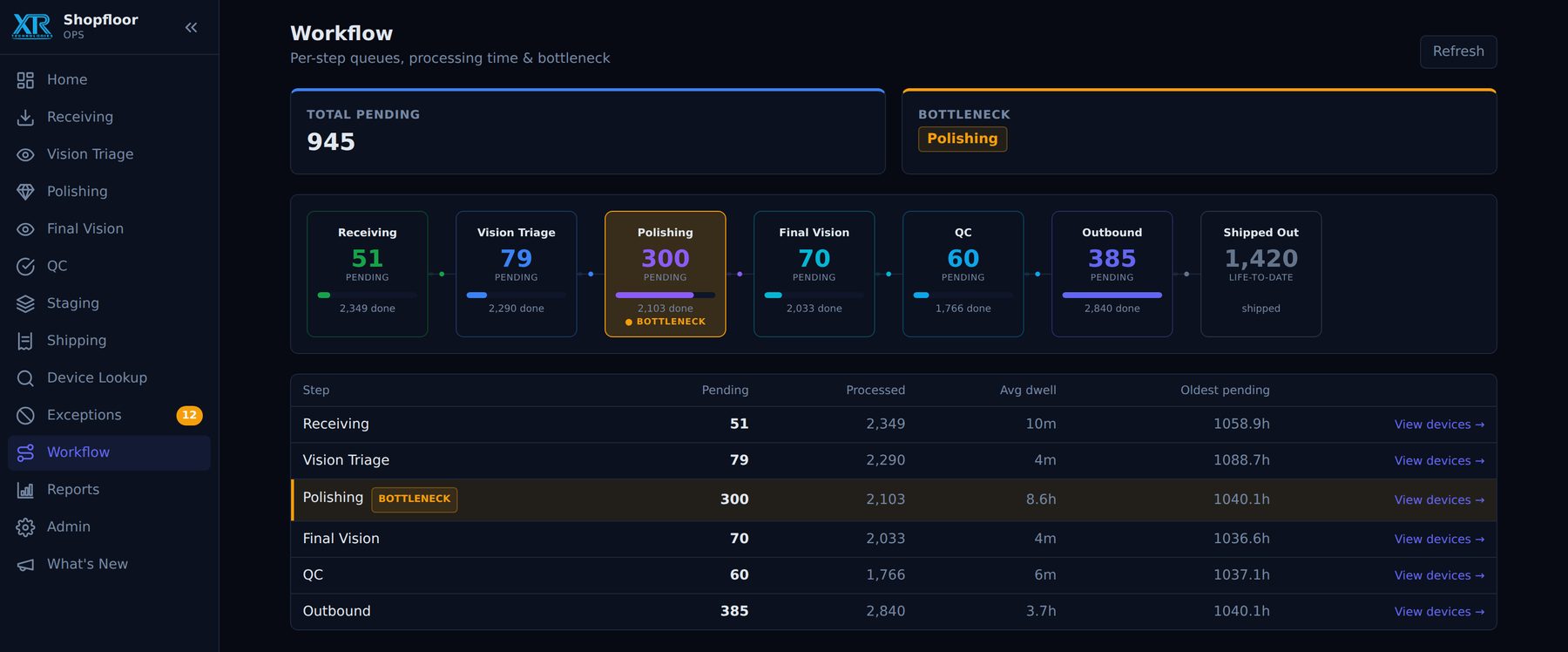
Out-of-sequence moves are refused; a supervisor override needs a written reason.
No rework or scrap decision is recordable without a base code.
A polishing badge cannot record a QC decision. Every action carries an operator.
Customers log in to the same data, scoped to their organisation, with cost per device.
Why XTR
Most refurbishment lines still polish by feel: wet, slow to prepare, graded by eye and managed on spreadsheets. XTR replaced each weak link with an engineered, measured one.
Conventional polishing
Heavy use of water means every phone has to be sealed, taped and protected first. Water damage still happens.
With XTR
The process uses very little water, so there is no sealing, taping or protective jig. Phones go straight from plasma cleaning to polishing.
Conventional polishing
With no inspection built in, nobody can show what improved or whether the work paid off.
With XTR
Every phone is scanned before polishing and again after, so each one has a before-and-after record.
Conventional polishing
Whether to polish is decided by eye at the bench, and varies by person and by shift.
With XTR
The system predicts the grade after polishing and weighs the gain against the cost. Operators get a clear recommendation.
Conventional polishing
Phones go missing between stations and bottlenecks are found late.
With XTR
XTR Shopfloor tracks every phone through every step and shows queues and inventory live.
Conventional polishing
Light marks get over-worked, deep scratches under-worked, and results depend on the operator.
With XTR
Recipes are chosen for the phone's condition and the target grade, and the machine records what it did.
Conventional polishing
Grading by eye differs between people and sites, and one fixed standard cannot serve every market.
With XTR
Grades come from measurements and your own grading policies, one for each customer or market.
Company
XTR was founded in 2012 inside a phone repair center, where it developed the polishing processes that became its patented technology. Today it serves carriers, insurers and refurbishers running certified pre-owned programs.
Founded inside a repair center; polishing processes developed.
Korean patent awarded.
US patent awarded.
Vision grading launched.
One complete line: vision, polishing and shop-floor software.
Contact
Tell us which solution you are interested in and roughly how many devices you handle. We will show you the equipment and what it could change for your grade mix.
Or write to info@xtrtechnologies.com